Confessions
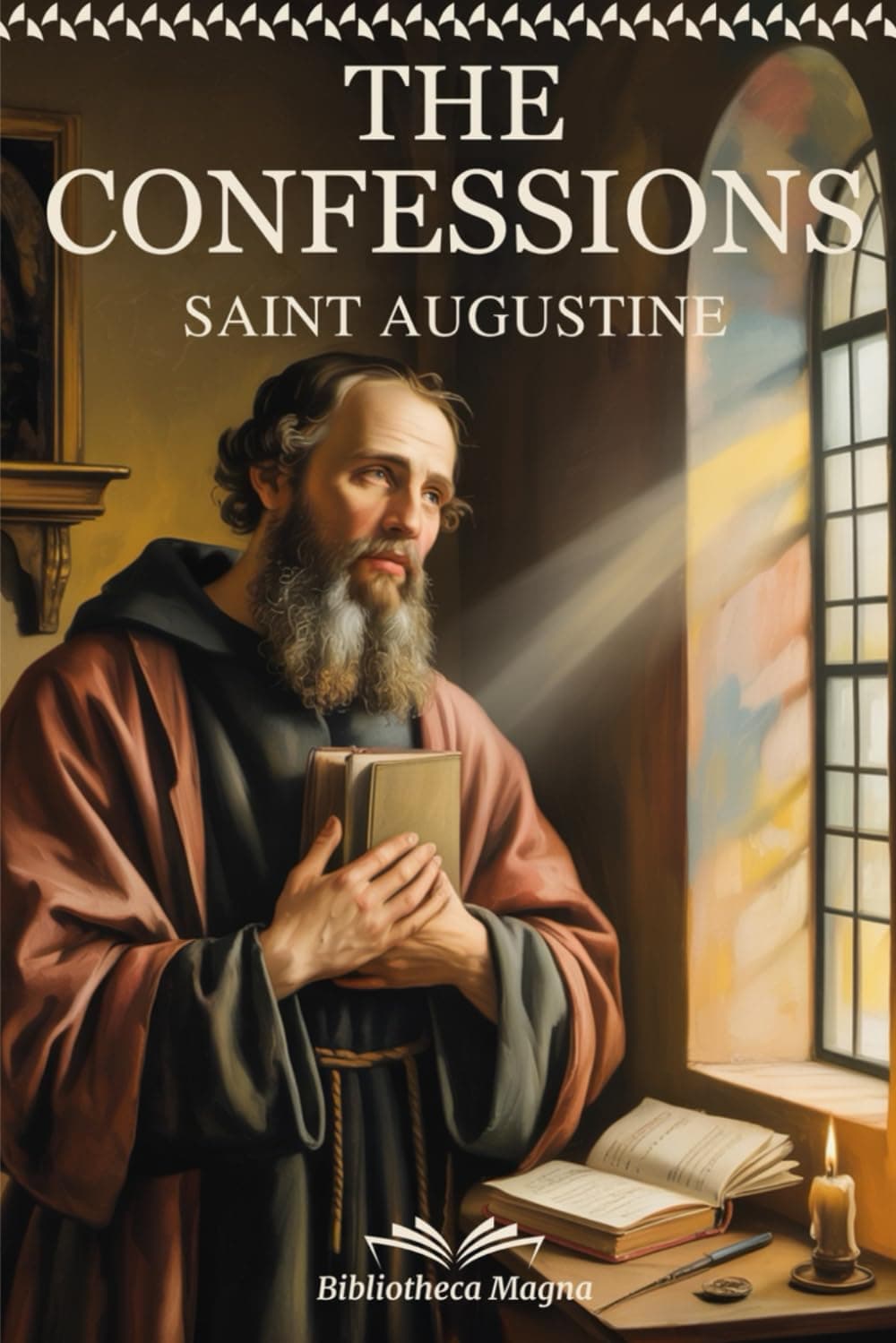
“You have made us for yourself, O Lord, and our hearts are restless until they rest in you.”
Confessions Summary
A man looks back on his life and lays it bare before God. Augustine recounts his youth in North Africa—the pear tree he robbed for the sheer thrill of sin, the mistress he loved and abandoned, the years of intellectual wandering through Manichaeism, skepticism, and Neoplatonism—all leading to the shattering moment in a Milan garden when he heard a child's voice say 'take up and read,' opened the letters of Saint Paul, and was converted. But this is no simple before-and-after story of redemption.
What makes the Confessions extraordinary is its psychological depth. Augustine does not simply confess his sins; he interrogates them. Why did he steal those pears when he was not hungry? Why does the human will war against itself? What is memory, and how does time work? The final books plunge into philosophical meditation on the nature of creation and eternity. Written as a prayer addressed directly to God, the Confessions is at once the most intimate autobiography ever written and a rigorous philosophical inquiry into the mystery of the human soul.
Why Read Confessions?
The Confessions is the autobiography that invented autobiography. Before Augustine, no one had written about the inner life with such ruthless honesty—the petty sins, the sexual obsessions, the intellectual vanity, the desperate longing for something beyond the self. In doing so, he created the template for every spiritual memoir, every recovery narrative, every confessional essay that has followed in the sixteen centuries since.
But the Confessions is far more than a conversion story. Augustine's meditations on time, memory, and desire remain among the most penetrating in Western philosophy. His analysis of why we do what we know we should not do anticipates Freud by fifteen hundred years. Whether you are a person of faith or no faith at all, this book will confront you with questions about consciousness, will, and the hunger for meaning that no subsequent thinker has fully answered.
About Augustine
Augustine of Hippo (354–430) was born in Roman North Africa to a pagan father and a devoutly Christian mother, Monica, whose relentless prayers for his conversion became legendary. After a youth of intellectual restlessness and sensual indulgence, he converted to Christianity in 386 and became Bishop of Hippo, where he spent the rest of his life writing, preaching, and shaping the theology of the Western church.
His output was staggering: over five million words survive, including The City of God and the Confessions, two of the most influential books in Western civilization. Augustine's ideas about grace, original sin, and the relationship between faith and reason dominated Christian thought for a millennium and continue to shape philosophy, theology, and literature. He is one of the few ancient writers who still feels startlingly modern.
Reading Guide
Ranked #122 among the greatest books of all time, Confessions by Augustine has earned its place in the literary canon. Originally written in Latin and published in c. 397, this challenging read from Rome continues to resonate with readers today.
This book belongs to our Philosophy & Faith collection, where you can discover more books that share its spirit and themes.
If you enjoy challenging reads like this one, you might also like Ulysses, Moby-Dick, or Lolita.
From the Philosophy & Faith Collection
If you enjoyed Confessions, discover more masterpieces that share its spirit.
 #11View Book
Crime and Punishment
Fyodor Dostoevsky
High•20-25 hours #18View Book
The Bible
Various
Variable•60-80 hours #19View Book
The Brothers Karamazov
Fyodor Dostoevsky
Very High•35-40 hours #21View Book
The Stranger
Albert Camus
Moderate•3-4 hours
Browse more collections