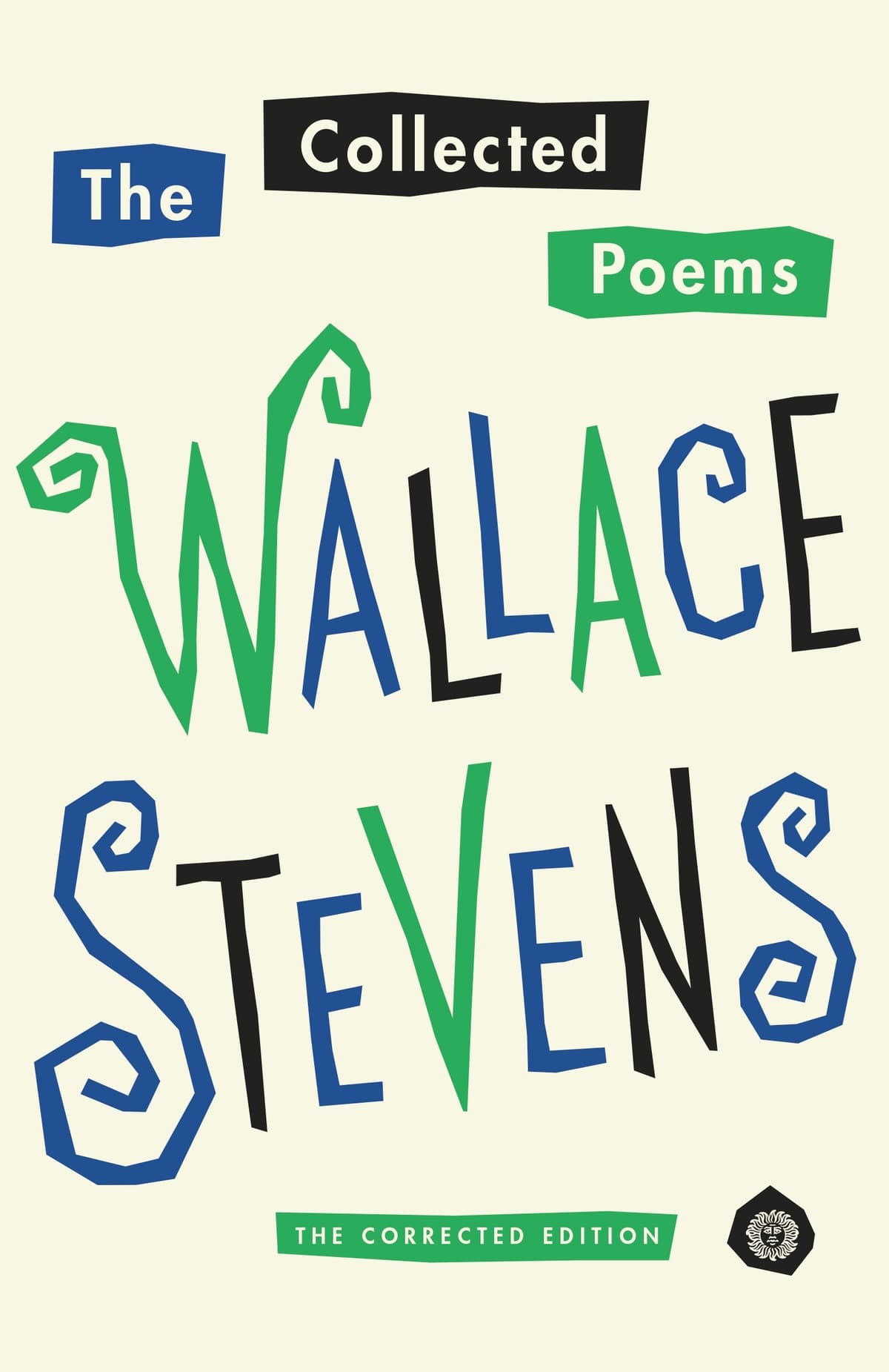
Collected Poems
“The only emperor is the emperor of ice-cream.”
Collected Poems Summary
Wallace Stevens's Collected Poems gathers the work of a lifetime spent exploring the relationship between the imagination and reality, between the mind's capacity to create order and the world's stubborn resistance to it. The collection moves from the early exuberance of Harmonium, with its lush tropical imagery and playful musicality, through the more austere philosophical meditations of Ideas of Order and The Man with the Blue Guitar, to the grand, abstract canvases of Transport to Summer and The Auroras of Autumn. Across nearly five hundred pages, Stevens returns again and again to his central subject: the act of perception itself, the way the human mind shapes and is shaped by the world it encounters. His poems range from brief, jewel-like lyrics to extended philosophical sequences, from the sensuous concreteness of a jar placed on a Tennessee hillside to the cosmic abstraction of a supreme fiction that might replace the God in whom Stevens could not believe. The seasons recur throughout, especially autumn and winter, as metaphors for the cycles of creation and diminishment that govern both nature and the imagination.
Stevens is the poet of the mind thinking, and his Collected Poems is one of the supreme achievements of American modernism. Where Eliot sought salvation in tradition and Pound in history, Stevens placed his faith in the imagination as the one human faculty capable of making meaning in a world without inherent purpose. His language is unlike anything else in English poetry: at once ornate and precise, sensuous and cerebral, playful and deeply serious. Poems like Sunday Morning, The Emperor of Ice-Cream, The Idea of Order at Key West, and Notes Toward a Supreme Fiction have become permanent fixtures of the literary canon, each one a meditation on how art transforms the raw material of experience into something that sustains us. Stevens demonstrates that poetry is not an ornament to life but a necessary act of the mind, the blessed rage for order that makes human existence bearable.
Why Read Collected Poems?
Wallace Stevens offers you something no other poet quite provides: the experience of thinking beautifully. His poems do not tell stories or make confessions; they enact the process by which the mind encounters the world and attempts to make sense of it. If you have ever stood before a landscape and felt that your perception of it was as real and as significant as the landscape itself, Stevens is your poet. His language is intoxicating, full of exotic colors and sounds and surprising turns of phrase, but beneath the verbal richness lies a philosophical rigor that rewards sustained attention. To read Stevens is to feel your own capacity for thought and perception expand.
The Collected Poems is not a book you need to read from cover to cover. You can dip in anywhere, follow the poems that catch your ear, and gradually build a relationship with one of the most original minds in the history of poetry. Start with the celebrated anthology pieces, Sunday Morning, The Emperor of Ice-Cream, Thirteen Ways of Looking at a Blackbird, and let them draw you deeper into Stevens's world. What you will find is a body of work that makes the case, more persuasively than any philosophical argument could, that the imagination is not a luxury but a necessity, the faculty that makes human life worth living.
About Wallace Stevens
Wallace Stevens was born in 1879 in Reading, Pennsylvania, and led one of the most remarkable double lives in literary history. He attended Harvard, studied at New York Law School, and in 1916 joined the Hartford Accident and Indemnity Company, where he would work for the rest of his life, eventually rising to vice president. He wrote his poems in the mornings and on walks to the office, keeping his literary and professional lives rigorously separate. Many of his colleagues at the insurance company had no idea that the portly, reserved executive in the corner office was one of the most important poets in America.
Stevens published his first collection, Harmonium, in 1923 at the age of forty-three, and it was largely ignored. He fell silent for over a decade before returning with Ideas of Order in 1935, and from that point forward produced a steady stream of increasingly ambitious and philosophically complex work. The Collected Poems, published in 1954, won both the Pulitzer Prize and the National Book Award. Stevens died in 1955, and his reputation has only grown since. He is now widely regarded as one of the two or three greatest American poets of the twentieth century, a writer who demonstrated that the deepest philosophical questions could be addressed in verse of extraordinary beauty and imaginative power.
Reading Guide
Ranked #448 among the greatest books of all time, Collected Poems by Wallace Stevens has earned its place in the literary canon. Originally written in English and published in 1954, this challenging read from United States continues to resonate with readers today.
This book belongs to our Modern Mind collection, where you can discover more books that share its spirit and themes.
If you enjoy challenging reads like this one, you might also like Ulysses, Moby-Dick, or Lolita.
From the Modern Mind Collection
If you enjoyed Collected Poems, discover more masterpieces that share its spirit.
 #1View Book
Ulysses
James Joyce
Challenging•35-40 hours #2View Book
In Search of Lost Time
Marcel Proust
High•100+ hours #8View Book
The Sound and the Fury
William Faulkner
Very High•12-15 hours #13View Book
Lolita
Vladimir Nabokov
Challenging•12-15 hours
Browse more collections