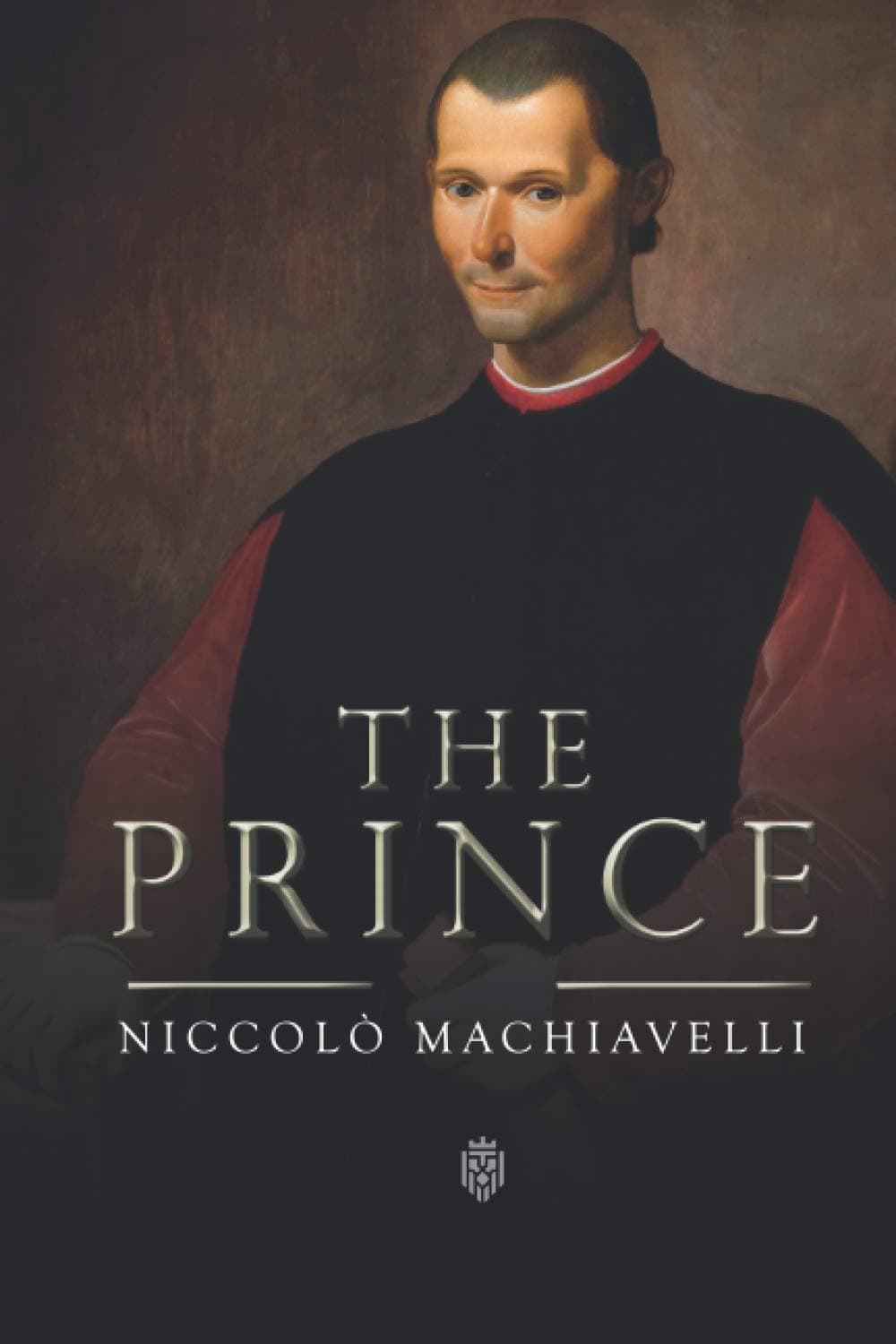
The Prince
“Everyone sees what you appear to be, few experience what you really are.”
The Prince Summary
Written in exile by a disgraced Florentine diplomat desperate to regain his political footing, The Prince is a slim treatise on the acquisition and maintenance of political power that has scandalized and fascinated readers for five hundred years. Machiavelli strips away every pious illusion about governance and speaks with brutal clarity: a prince must be willing to act against mercy, against faith, against humanity, and against religion if the survival of the state demands it.
Drawing on examples from ancient Rome, contemporary Italy, and his own experience as a senior official in the Florentine Republic, Machiavelli argues that the successful ruler must be both fox and lion—cunning enough to recognize traps and fierce enough to frighten wolves. The book was written as a job application to the Medici family, but it became something far greater: the founding text of modern political thought, a manual that separates politics from morality and asks not how rulers should behave, but how they actually do.
Why Read The Prince?
The Prince is one of the most dangerous books ever written—not because it teaches evil, but because it tells the truth. Before Machiavelli, political writing was a branch of moral philosophy: rulers were advised to be virtuous, just, and God-fearing. Machiavelli looked at the actual behavior of princes and popes and said: virtue gets you killed. The shock has never worn off.
Five centuries later, The Prince remains essential reading for anyone who wants to understand how power really works—in governments, corporations, or any human institution. Its lessons are uncomfortable but irrefutable: that appearances matter more than reality, that fear is more reliable than love, and that good intentions without the willingness to act ruthlessly will destroy both the leader and the led. It is the shortest, sharpest book on power ever written, and it has lost none of its edge.
About Niccolò Machiavelli
Niccolò Machiavelli (1469–1527) served as a senior diplomat and military strategist for the Florentine Republic during the tumultuous years of the Italian Wars. He negotiated with kings and popes, organized citizen militias, and witnessed firsthand the brutal mechanics of Renaissance statecraft. When the Medici returned to power in 1512, he was arrested, tortured, and exiled to his farm outside Florence.
It was in this enforced retirement that he wrote The Prince, the Discourses on Livy, and several plays and histories that secured his reputation as the founder of modern political science. His name became an adjective—'Machiavellian'—synonymous with cunning and amorality, though scholars continue to debate whether The Prince was sincere advice, bitter satire, or something in between.
Reading Guide
Ranked #143 among the greatest books of all time, The Prince by Niccolò Machiavelli has earned its place in the literary canon. Originally written in Italian and published in 1532, this moderate read from Italy continues to resonate with readers today.
This book belongs to our Philosophy & Faith collection, where you can discover more books that share its spirit and themes.
If you enjoy moderate reads like this one, you might also like One Hundred Years of Solitude, Nineteen Eighty-Four, or Wuthering Heights.
From the Philosophy & Faith Collection
If you enjoyed The Prince, discover more masterpieces that share its spirit.
 #11View Book
Crime and Punishment
Fyodor Dostoevsky
High•20-25 hours #18View Book
The Bible
Various
Variable•60-80 hours #19View Book
The Brothers Karamazov
Fyodor Dostoevsky
Very High•35-40 hours #21View Book
The Stranger
Albert Camus
Moderate•3-4 hours
Browse more collections