Manon Lescaut
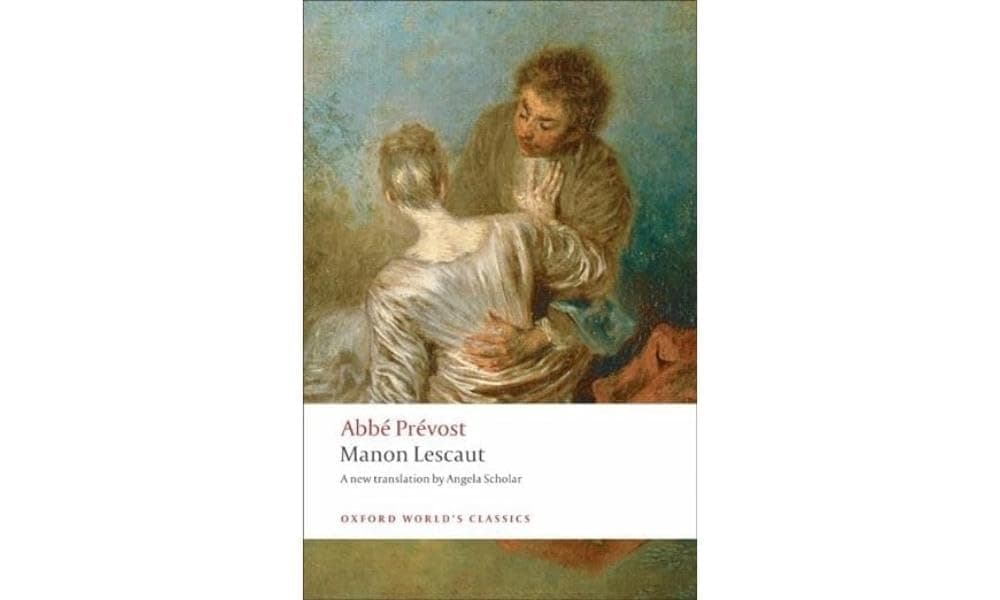
“I am not asking whether you are attached to me, for I have no doubt of it; but I ask you to tell me what sort of life mine is to be.”
Manon Lescaut Summary
Manon Lescaut tells the story of the Chevalier des Grieux, a young nobleman of good family and promising prospects, who at the age of seventeen encounters the beautiful Manon Lescaut and falls into a passion so consuming that it destroys his position, his fortune, and nearly his life. The novel is framed as a narrative related by des Grieux himself to a sympathetic listener, and through his fevered account we follow the lovers through a dizzying series of separations, reunions, schemes, and betrayals. Manon is irresistible but inconstant, drawn equally to love and to luxury; whenever poverty threatens, she turns to wealthy protectors, leaving des Grieux devastated. He in turn descends through gambling, cheating, and even complicity in Manon's arrangements, sacrificing every principle to keep her near. Their passion carries them from Paris to the penal colony of Louisiana, where, stripped of all social pretension and worldly temptation, their love finally achieves a purity that the corrupt world of Paris never allowed, only for tragedy to claim Manon in the American wilderness.
Prevost's novel is one of the foundational works of modern fiction, a narrative that broke decisively with the idealized romances of its era to portray desire as an irrational, destructive, and irreducible force. Des Grieux is one of literature's great unreliable narrators, a man who eloquently justifies his every degradation in the name of love while remaining blind to the moral catastrophe his passion creates. Manon herself remains tantalizingly opaque, seen entirely through des Grieux's adoring and anguished eyes, her motivations a mystery that the novel refuses to resolve. The work's influence on the literature of passion has been immense, anticipating the psychological realism of Stendhal and Flaubert and inspiring operas by Massenet and Puccini that have kept the story alive in the cultural imagination. Manon Lescaut endures because it confronts, with unflinching honesty, the capacity of desire to overwhelm reason, morality, and self-preservation.
Why Read Manon Lescaut?
If you want to understand the origins of the modern novel of passion, Manon Lescaut is where the tradition begins in earnest. Prevost strips away the idealizations of earlier romance to present desire in all its irrational, self-destructive glory, and the result is a narrative that feels astonishingly modern despite its eighteenth-century setting. You will be drawn into des Grieux's obsession even as you recognize its madness, and Manon herself will fascinate you precisely because the novel refuses to explain her fully. The story moves at a breathless pace through reversals of fortune that would strain credulity if Prevost's psychological insight did not make every turn feel inevitable.
Beyond its narrative excitement, Manon Lescaut offers you a window into the tensions of pre-Revolutionary French society, where the rigid codes of class and honor were already being undermined by the forces of desire and individualism that would reshape the modern world. The novel asks whether love can redeem the moral compromises it demands, and its devastating conclusion provides an answer that is neither simple nor comforting. Reading it enriches your understanding of the entire tradition of the European novel and gives you the source material for two of the greatest operas ever composed. It is a compact, intense masterpiece that rewards rereading and reflection.
About Abbé Prévost
Antoine François Prévost, known as the Abbé Prévost, was born in 1697 in Hesdin, in the Artois region of northern France. His early life was marked by restlessness and contradiction: he alternated between Jesuit education and military service before taking monastic vows with the Benedictines, only to flee France for England and Holland when his unconventional conduct drew official displeasure. In exile, he supported himself through prolific writing, producing novels, translations, and a literary journal. His masterpiece, Manon Lescaut, was published in 1731 as the final volume of a longer work, Mémoires et aventures d'un homme de qualité, and was immediately recognized as something extraordinary despite being officially condemned and confiscated for its frank treatment of desire. Prévost eventually reconciled with the Church, returned to France, and spent his later years as a man of letters, translating Richardson's novels and producing historical and geographical works.
Prévost's literary legacy rests almost entirely on Manon Lescaut, which is regarded as one of the founding texts of the modern psychological novel. By centering his narrative on the irrational power of desire and refusing to moralize about his characters' transgressions, he opened possibilities for fiction that would be explored by Rousseau, Laclos, Stendhal, and Flaubert. The novel's influence extends beyond literature into music, inspiring operas by Massenet and Puccini that are among the most performed works in the repertoire. Prévost died in 1763 under circumstances as dramatic as his fiction, collapsing while walking near Chantilly. His contribution to the development of the novel, though concentrated in a single work, was transformative, demonstrating that fiction could explore the deepest and most dangerous territories of human emotion with honesty and art.
Reading Guide
Ranked #472 among the greatest books of all time, Manon Lescaut by Abbé Prévost has earned its place in the literary canon. Originally written in French and published in 1731, this moderate read from France continues to resonate with readers today.
This book belongs to our Love & Loss collection, where you can discover more books that share its spirit and themes.
If you enjoy moderate reads like this one, you might also like One Hundred Years of Solitude, Nineteen Eighty-Four, or Wuthering Heights.
From the Love & Loss Collection
If you enjoyed Manon Lescaut, discover more masterpieces that share its spirit.
 #3View Book
The Great Gatsby
F. Scott Fitzgerald
Accessible•5-6 hours #10View Book
Anna Karenina
Leo Tolstoy
High•30-35 hours #12View Book
Pride and Prejudice
Jane Austen
Accessible•10-12 hours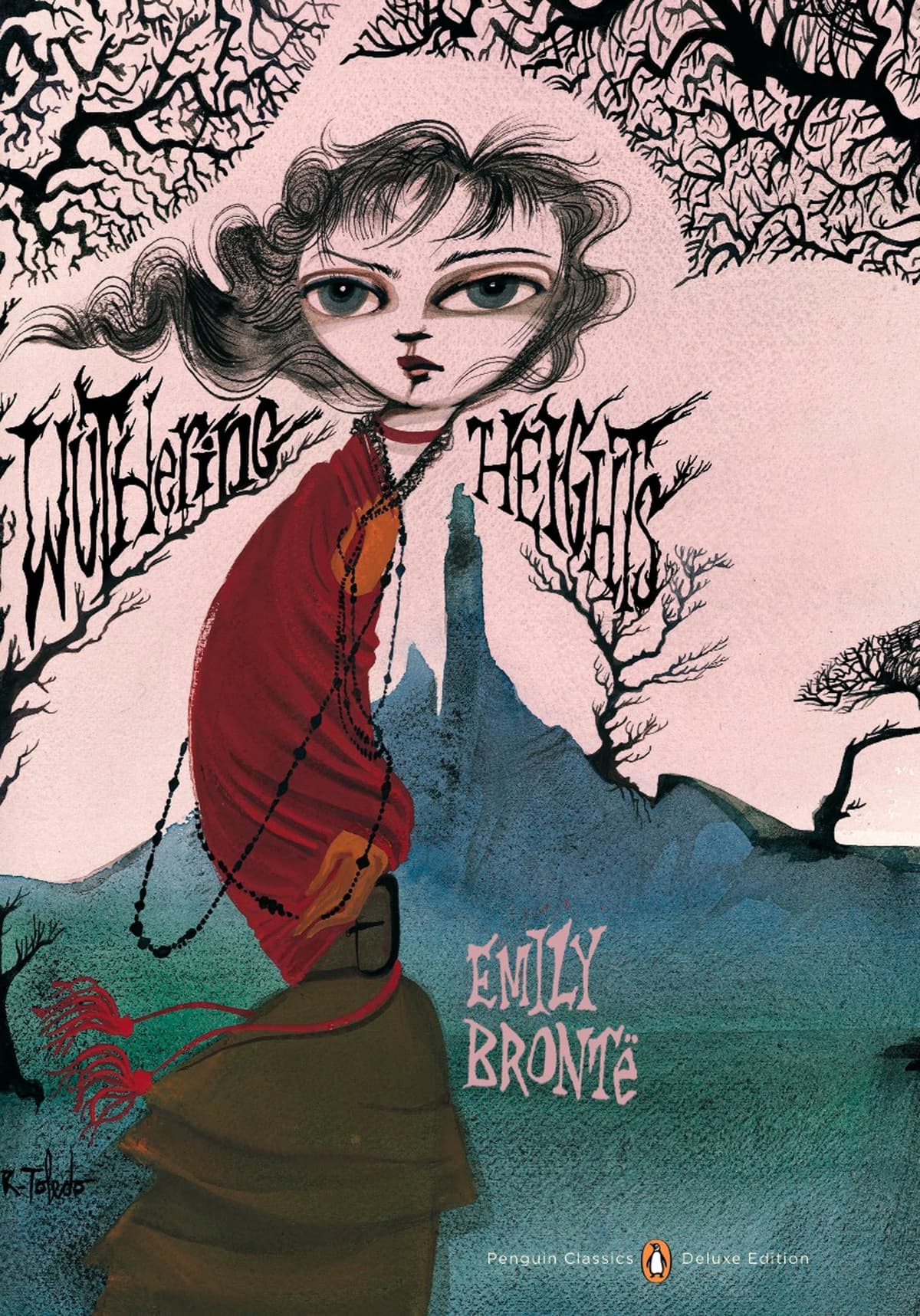 #15View Book
Wuthering Heights
Emily Brontë
Moderate•10-12 hours
Browse more collections