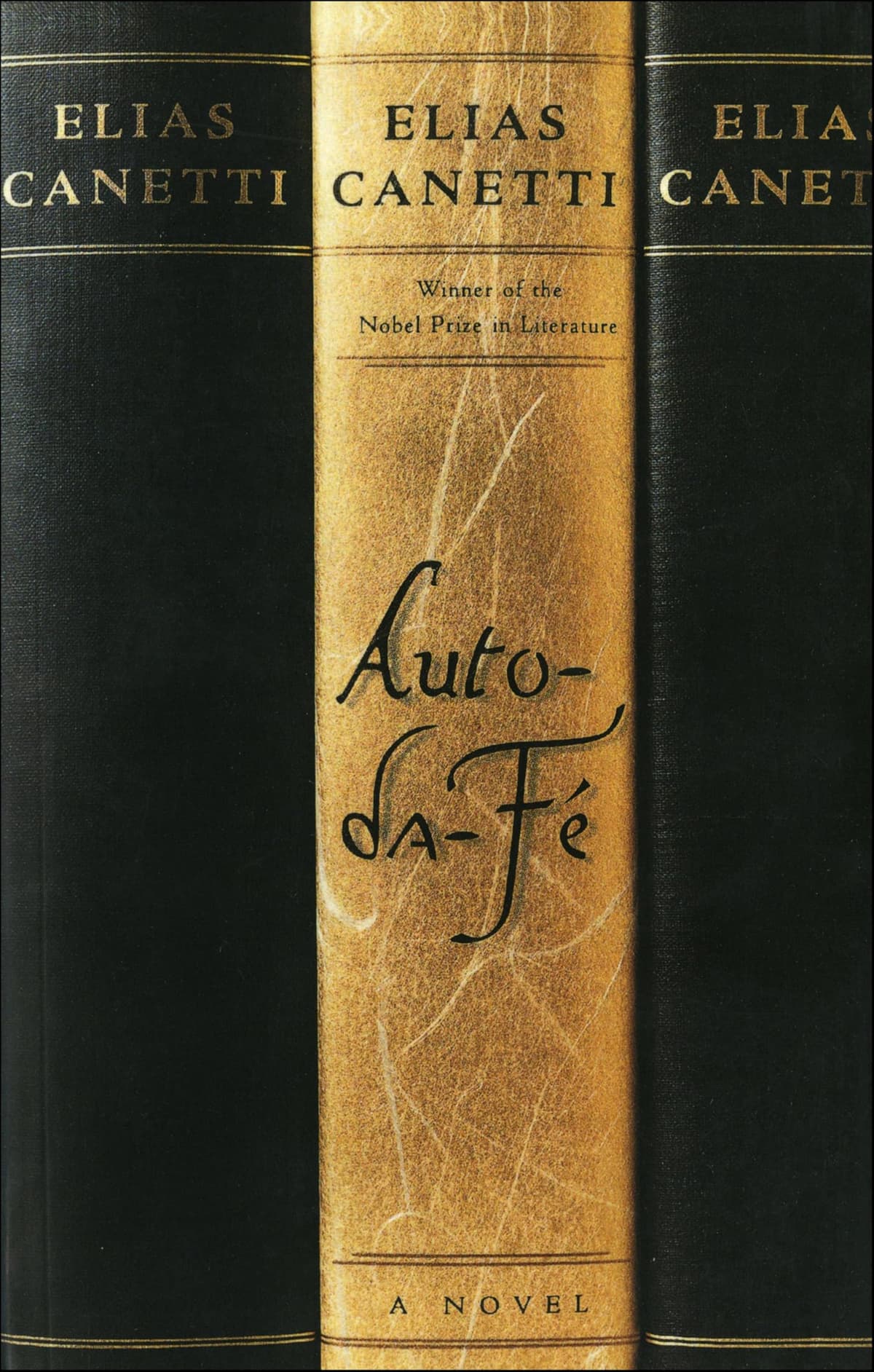
Auto-da-Fé
“There is no doubt: the study of man is just beginning, at the same time that his end is in sight.”
Auto-da-Fé Summary
Peter Kien is a world-renowned sinologist, the greatest living authority on Chinese philosophy and literature, who lives in a vast private library of twenty-five thousand volumes in a Vienna apartment and has arranged his entire existence to eliminate all contact with the chaotic, repulsive world of human beings. He marries his housekeeper, Therese Krumbholz, a coarse, illiterate woman, under the catastrophic delusion that she shares his reverence for books. In fact, she covets his apartment and his money, and their marriage becomes a grotesque power struggle in which Therese, allied with the brutal caretaker Benedikt Pfaff, gradually expels Kien from his own home and his own library. Cast out into the streets of Vienna, Kien descends into the underworld of the city, falling under the influence of the hunchbacked chess hustler Fischerle, a scheming dwarf who exploits Kien's madness for profit. Kien's delusions intensify: he believes he carries his library in his head, he hallucinates books everywhere, and his grip on reality dissolves entirely. His brother Georges, a psychiatrist in Paris, arrives and briefly restores order, but the novel's conclusion is an act of apocalyptic self-destruction that reduces everything to ash.
Auto da Fe, originally published in German as Die Blendung (The Blinding), is one of the most extraordinary and disturbing novels of the twentieth century. Elias Canetti, who would later receive the Nobel Prize in Literature, wrote it in his twenties as a study of intellectual isolation pushed to its most extreme and terrifying conclusion. The novel is a savage satire of the life of the mind cut off from the life of the body and the world, a parable of how pure intellect, divorced from empathy and human connection, becomes a form of madness indistinguishable from the barbarism it claims to transcend. Written in the early 1930s, the novel carries an unmistakable prophetic charge: its vision of a civilization destroying itself through willful blindness, intellectual arrogance, and the inability to comprehend the reality of other minds anticipates the catastrophe that was about to engulf Europe.
Why Read Auto-da-Fé?
Auto da Fe is one of the most unsettling and intellectually exhilarating novels you will ever encounter, a book that reads like a fever dream of civilization consuming itself from within. If you have any interest in the relationship between intellect and madness, between the life of the mind and the realities of the body and the world, this novel will burrow into your consciousness and stay there. Canetti writes with a savage, darkly comic energy that transforms his cast of grotesques into figures of genuine symbolic power. Peter Kien, the scholar who has walled himself inside his library, is one of the great cautionary figures of modern fiction.
You should read this novel because it anticipated, with uncanny precision, the catastrophe of twentieth-century European civilization. Written in the early 1930s by a young man in Vienna, it depicts a world in which intellectual refinement coexists with moral blindness, in which the most civilized man in the room is also the most deluded, and in which the failure to see other human beings as real leads inexorably to destruction. The novel is demanding, hallucinatory, and often deliberately repulsive, but its power is undeniable. It stands alongside the works of Kafka and Broch as one of the essential novels of the Central European tradition.
About Elias Canetti
Elias Canetti was born in 1905 in Ruse, Bulgaria, into a Sephardic Jewish family of merchants. His first language was Ladino, and he grew up speaking Bulgarian, English, and French before adopting German, the language his parents used as their private tongue of intimacy, as his literary language. After his father's sudden death, his mother moved the family to Vienna, where Canetti was educated and where the intellectual culture of the city shaped his life's work. He studied chemistry at the University of Vienna but devoted himself to literature and the study of crowds and power, subjects that would preoccupy him for decades.
Canetti completed Auto da Fe at the age of twenty-six, but the novel was not widely recognized until decades later. His magnum opus of nonfiction, Crowds and Power, published in 1960, is a monumental study of mass psychology and the nature of political authority. He also wrote plays, essays, and three volumes of autobiography that rank among the finest memoirs of the twentieth century. He received the Nobel Prize in Literature in 1981, cited for writings marked by a broad outlook, a wealth of ideas, and artistic power. He lived in London for many years before settling in Zurich, where he died in 1994. His work, which defies easy categorization, is united by its obsessive inquiry into the nature of power, crowds, death, and the dangerous isolation of the individual mind.
Reading Guide
Ranked #500 among the greatest books of all time, Auto-da-Fé by Elias Canetti has earned its place in the literary canon. Originally written in German and published in 1935, this challenging read from Bulgaria continues to resonate with readers today.
This book belongs to our Modern Mind and Gothic & Dark collections, where you can discover more books that share its spirit and themes.
If you enjoy challenging reads like this one, you might also like Ulysses, Moby-Dick, or Lolita.
From the Modern Mind Collection
If you enjoyed Auto-da-Fé, discover more masterpieces that share its spirit.
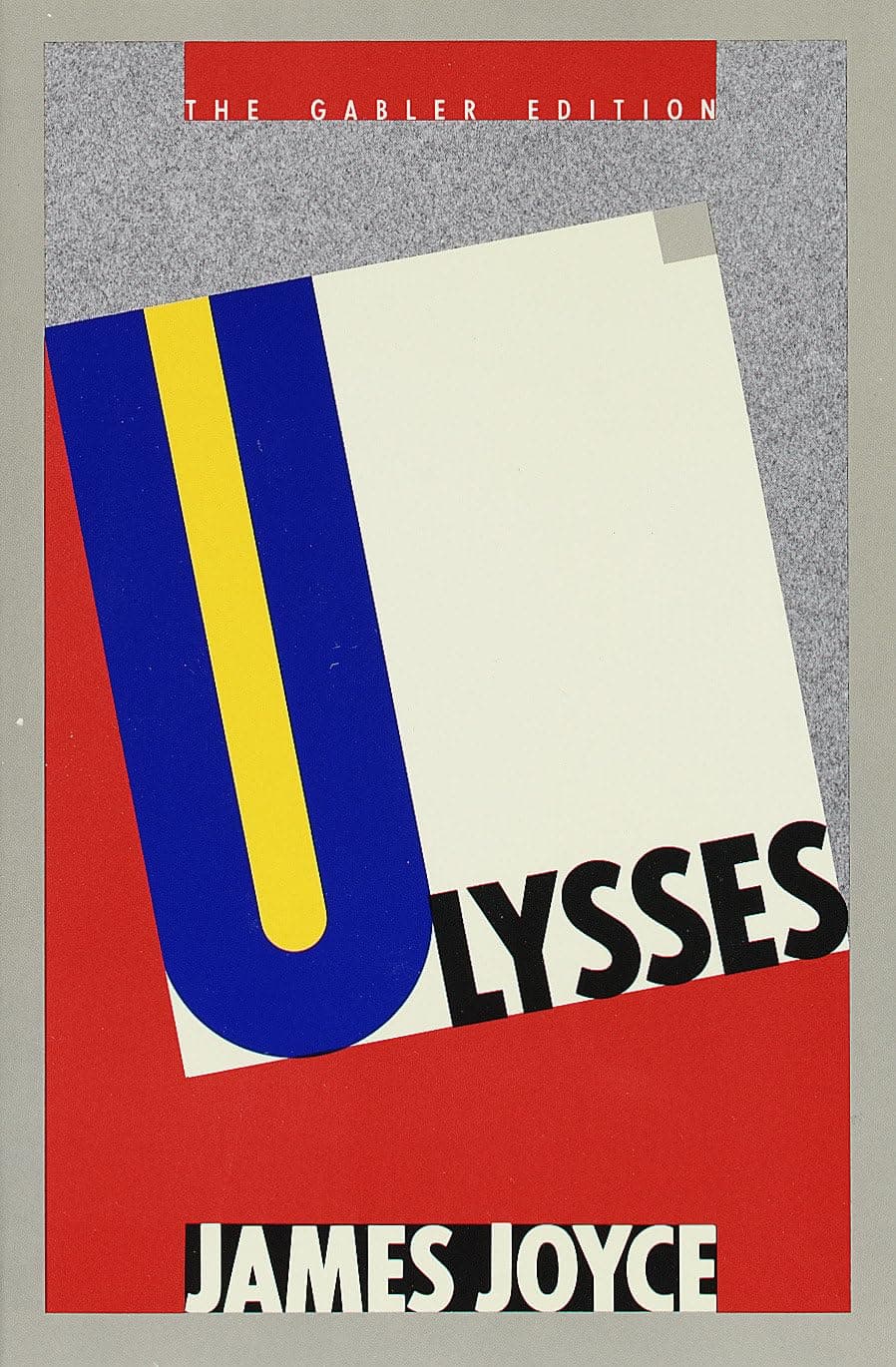 #1View Book
Ulysses
James Joyce
Challenging•35-40 hours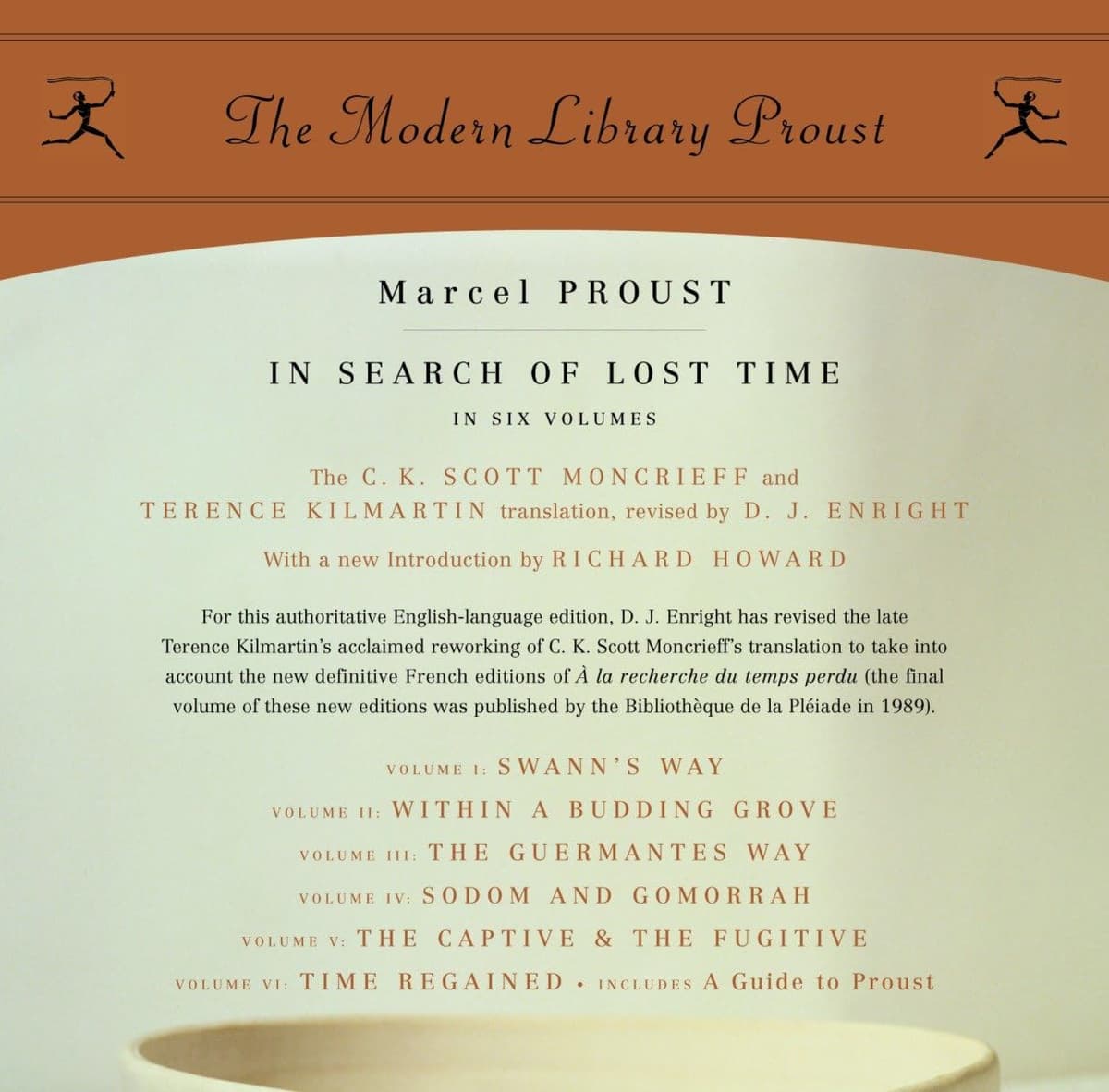 #2View Book
In Search of Lost Time
Marcel Proust
High•100+ hours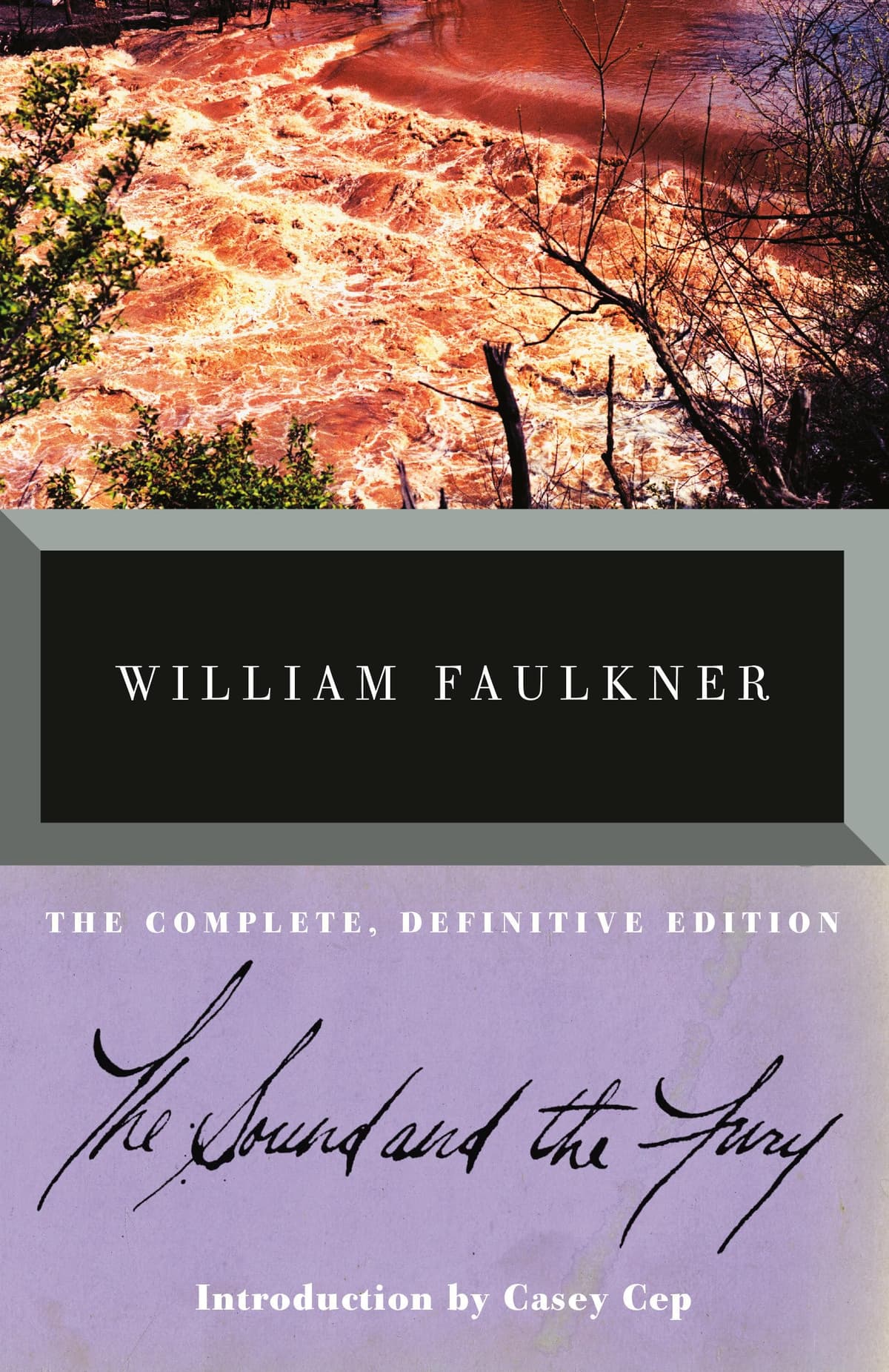 #8View Book
The Sound and the Fury
William Faulkner
Very High•12-15 hours #13View Book
Lolita
Vladimir Nabokov
Challenging•12-15 hours
Browse more collections