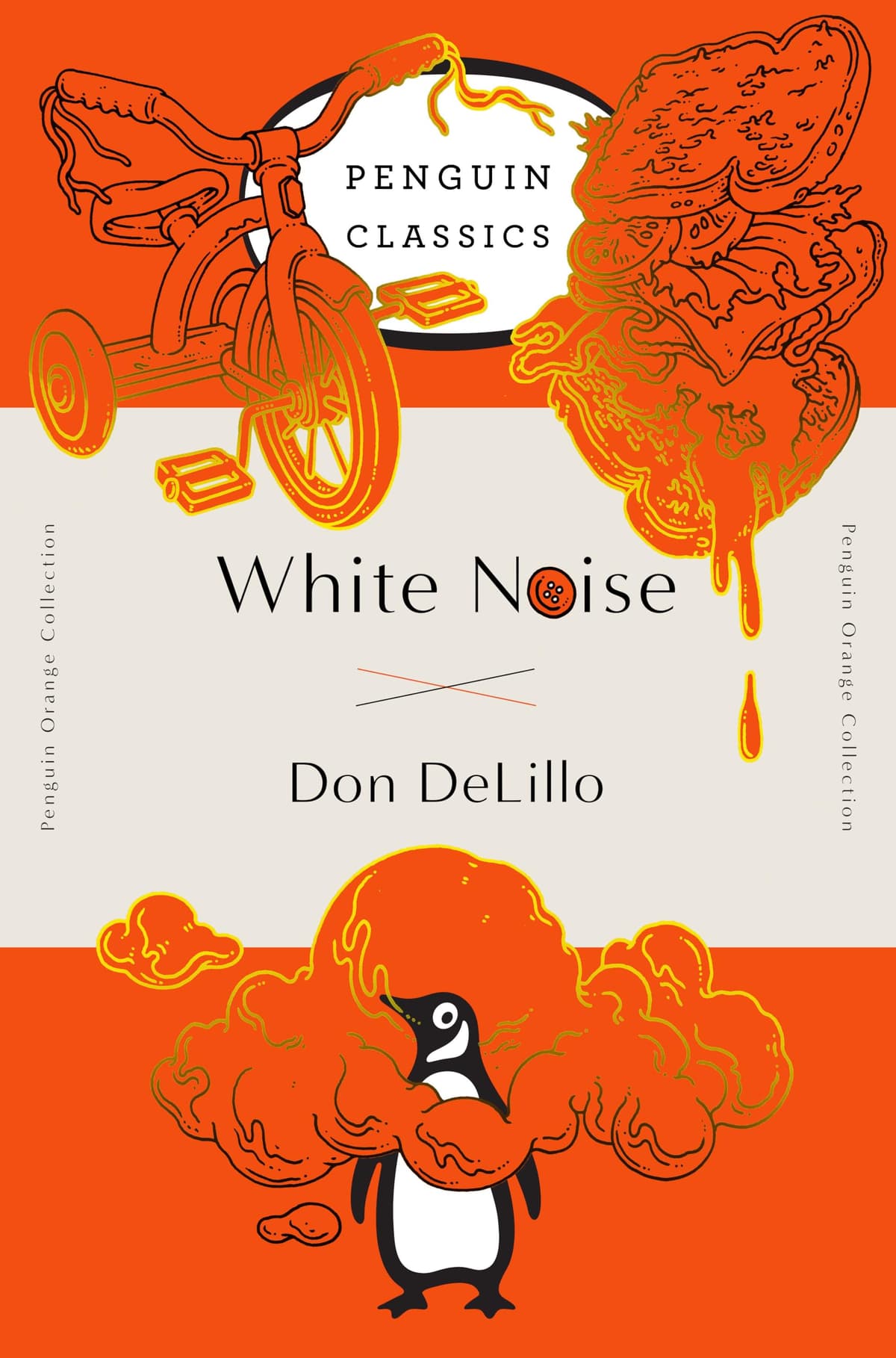
White Noise
“The greater the scientific advance, the more primitive the fear.”
White Noise Summary
Jack Gladney is a professor of Hitler Studies at a small Midwestern college, a discipline he invented and from which he derives a peculiar, insulating authority. He lives with his wife Babette and their blended family of children from various marriages in a town saturated by consumer noise—supermarket aisles gleaming with product labels, television murmuring in every room, radio waves carrying fragments of disaster. Their comfortable, media-drenched existence is disrupted when a chemical spill from a railcar produces the Airborne Toxic Event, a massive black cloud that forces the town to evacuate. Jack, who was briefly exposed to the toxin, becomes obsessed with his own mortality, and his terror deepens when he discovers that Babette has been secretly taking an experimental drug called Dylar, designed to suppress the fear of death, and has been trading sexual favors to obtain it.
White Noise is Don DeLillo's comic masterpiece and one of the defining novels of postmodern America. It captures with uncanny precision the texture of life in a culture where information has replaced experience, where brand names carry more emotional resonance than human relationships, and where the fear of death is simultaneously the one authentic feeling left and the thing most desperately medicated against. DeLillo's prose is simultaneously deadpan and lyrical, transforming supermarket trips and car evacuations into scenes of philosophical grandeur. The novel anticipates our current age of information overload, environmental anxiety, and pharmaceutical dependency with a prescience that has only grown more unsettling. It won the National Book Award in 1985 and remains DeLillo's most accessible and widely read work.
Why Read White Noise?
White Noise will make you see your own life with disturbing clarity. DeLillo captures the ambient hum of contemporary American existence—the supermarket, the television, the background radiation of consumer culture—with such precision that you may find yourself laughing in uncomfortable recognition at nearly every page. Jack Gladney's terror of death is both absurd and deeply relatable, and the novel's exploration of how we use technology, drugs, religion, and even academia to shield ourselves from mortality feels more relevant now than when it was published. No other novel so perfectly describes the experience of being alive in a world where information is everywhere and meaning is nowhere.
But White Noise is far more than a satire of consumer culture. It is also a genuinely moving novel about marriage, parenthood, and the desperate human need to be known by another person. The conversations between Jack and Babette—funny, evasive, tender, frightened—are among the most realistic depictions of marriage in American fiction. DeLillo writes sentences that lodge in your brain like advertising jingles, which is precisely the point. This is essential reading for anyone who wants to understand the strange, media-saturated, perpetually anxious world we have built for ourselves.
About Don DeLillo
Don DeLillo was born in 1936 in the Bronx, New York, to Italian immigrant parents. He grew up in a working-class Catholic household and discovered his literary vocation in his twenties, influenced by jazz, abstract expressionism, and the European avant-garde. He worked for several years as a copywriter at an advertising agency before publishing his first novel, Americana, in 1971. For the next two decades, he produced a steady stream of ambitious novels while maintaining a famously private personal life.
DeLillo is one of the most important American novelists of the late twentieth century. His major works—White Noise, Libra, Mao II, Underworld, and The Names—chart the intersection of technology, terrorism, media, and consciousness in postmodern America with a prescience that borders on the prophetic. White Noise won the National Book Award in 1985, and Underworld is widely considered his magnum opus. His prose style—clipped, incantatory, simultaneously cold and ecstatic—has influenced a generation of writers from David Foster Wallace to Rachel Kushner. DeLillo was awarded the National Book Award for lifetime achievement, the PEN/Saul Bellow Award, and the Library of Congress Prize for American Fiction, cementing his status as one of the essential chroniclers of American life in the age of information.
Reading Guide
Ranked #381 among the greatest books of all time, White Noise by Don DeLillo has earned its place in the literary canon. Originally written in English and published in 1985, this moderate read from United States continues to resonate with readers today.
This book belongs to our Modern Mind and American Spirit collections, where you can discover more books that share its spirit and themes.
If you enjoy moderate reads like this one, you might also like One Hundred Years of Solitude, Nineteen Eighty-Four, or Wuthering Heights.
From the Modern Mind Collection
If you enjoyed White Noise, discover more masterpieces that share its spirit.
 #1View Book
Ulysses
James Joyce
Challenging•35-40 hours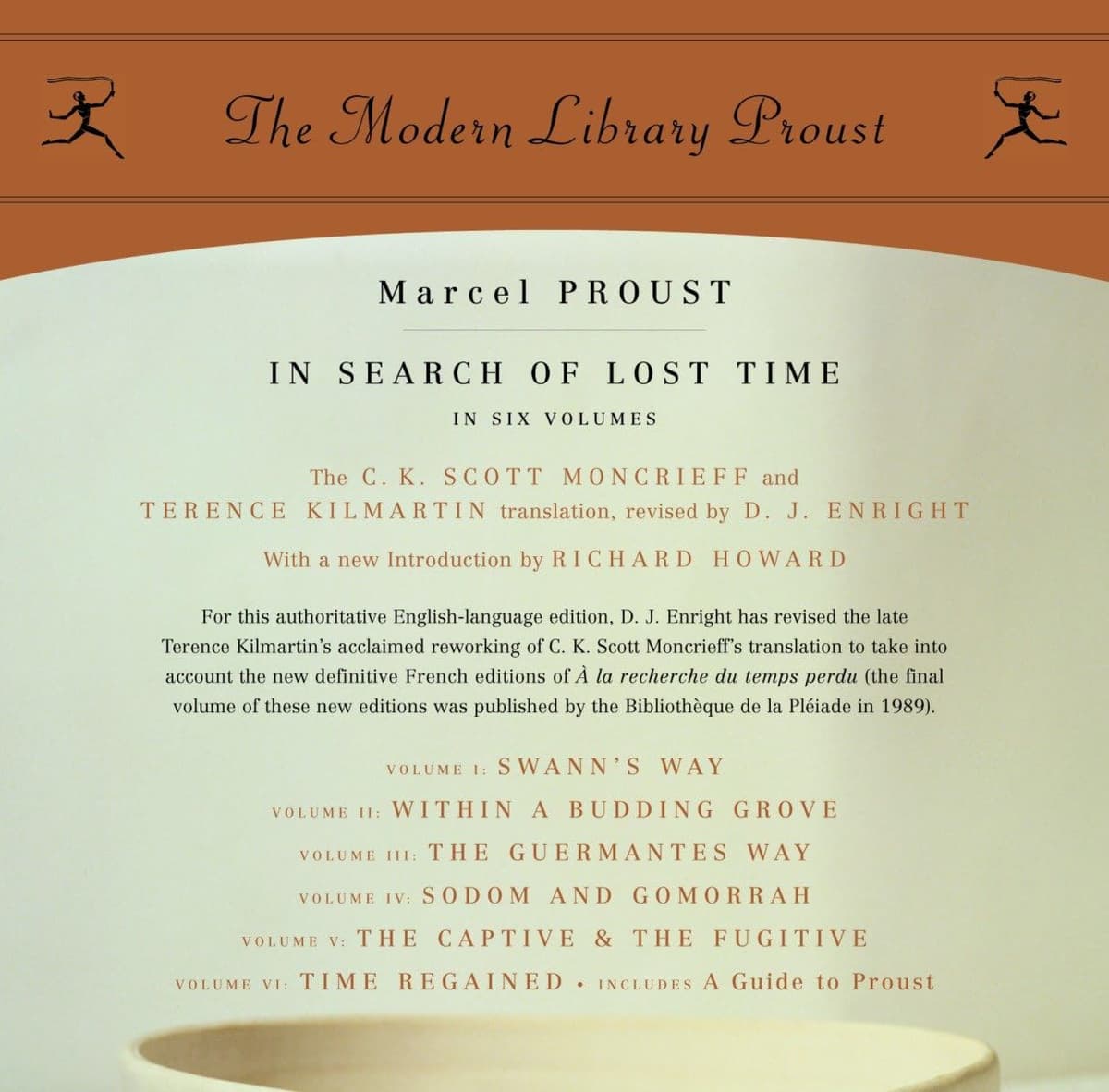 #2View Book
In Search of Lost Time
Marcel Proust
High•100+ hours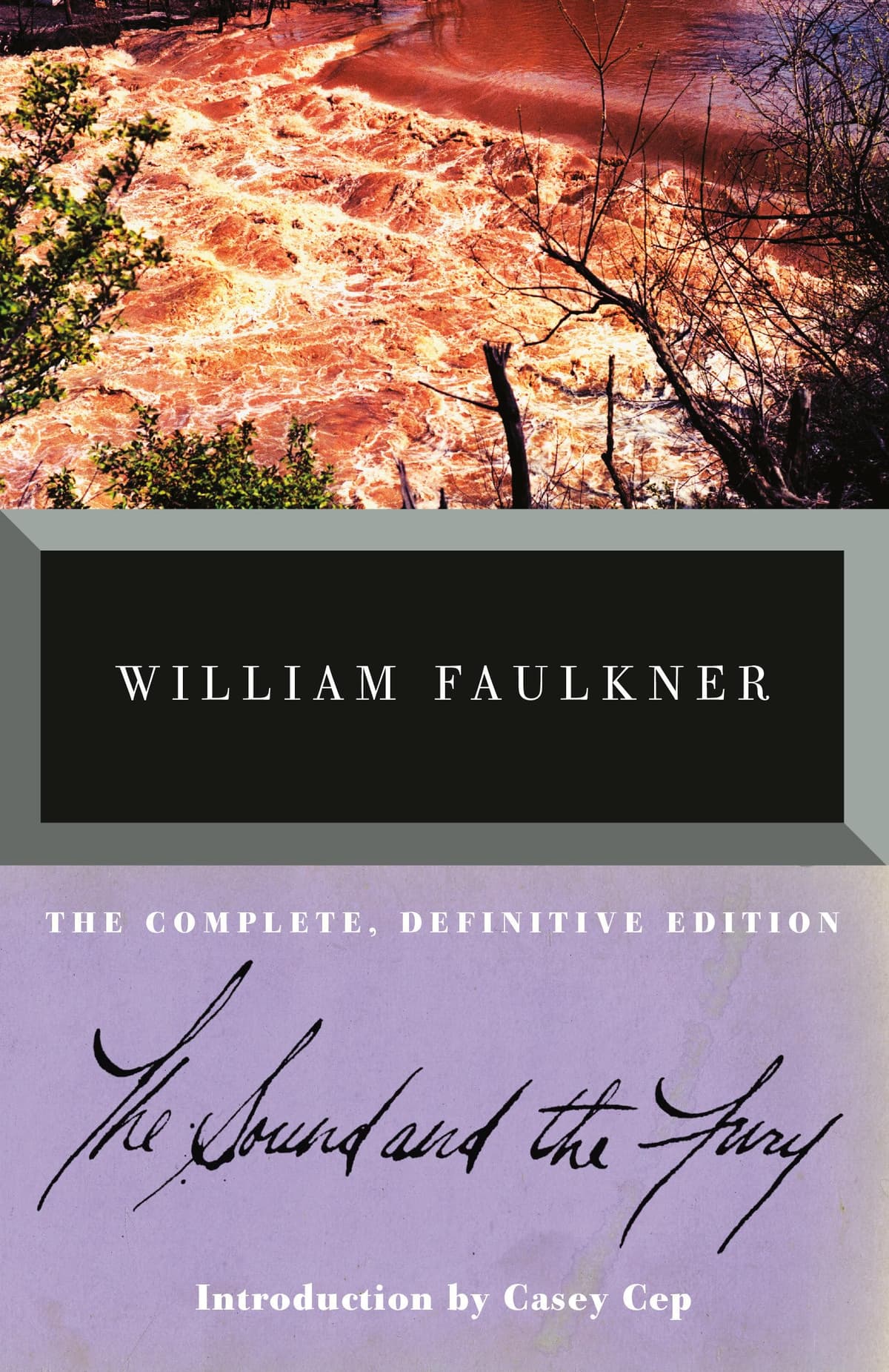 #8View Book
The Sound and the Fury
William Faulkner
Very High•12-15 hours #13View Book
Lolita
Vladimir Nabokov
Challenging•12-15 hours
Browse more collections